
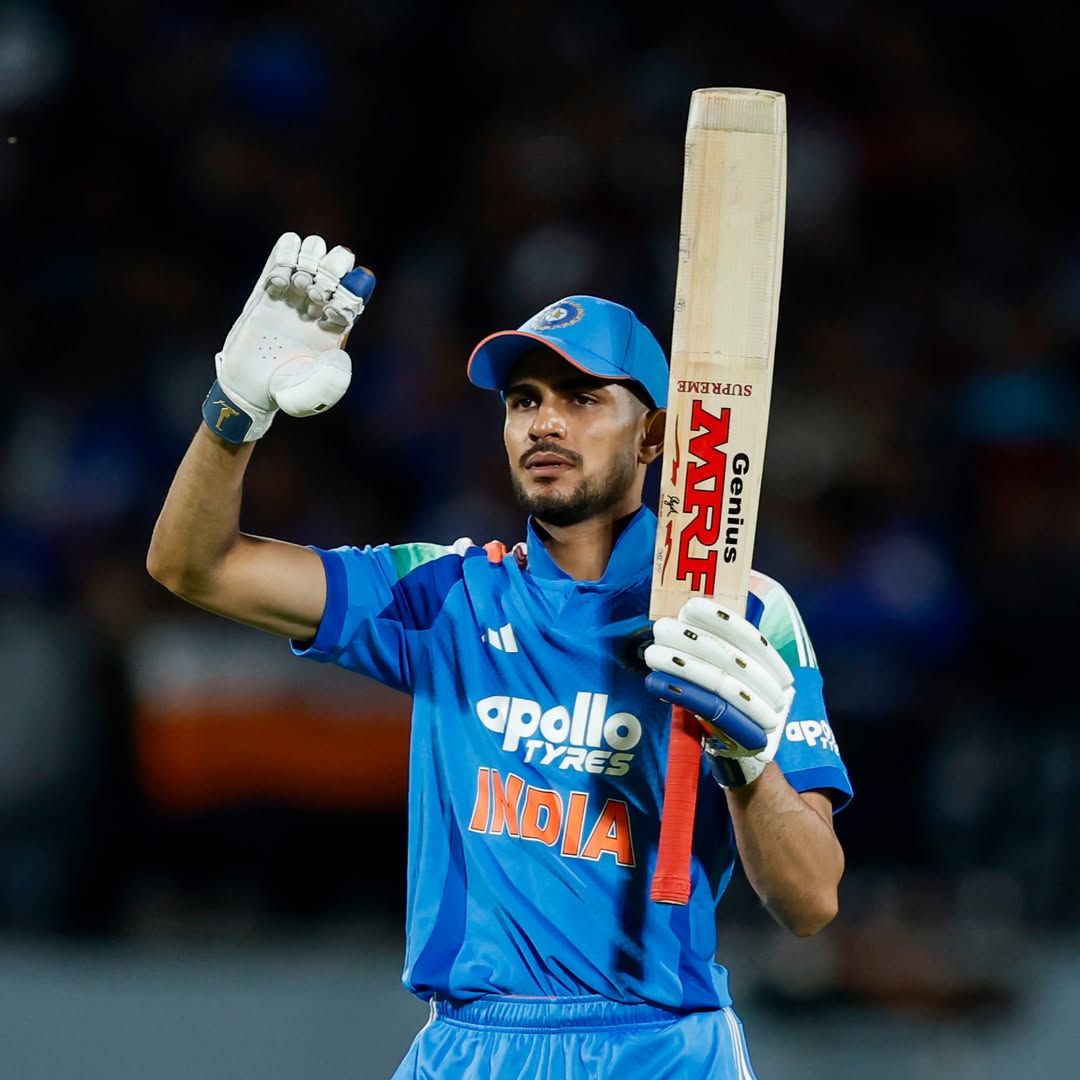
Shubman Gill Leads India to Dominant Seven-Wicket Victory Over Afghanistan in Rain-Hit First ODI
India began their ODI series against Afghanistan with a convincing seven-wicket victory in the opening match at the Himachal Pradesh Cricket Association Stadium in Dharamshala. Despite rain reducing the contest to 25 overs per side, fans were treated to an entertaining clash filled with aggressive batting, spectacular fielding, and several individual milestones.
The match carried added significance as India started their preparations for the 2027 ODI World Cup. Under the leadership of Shubman Gill, the hosts entered the series looking to test combinations and provide opportunities to players in key positions. Afghanistan, meanwhile, arrived with confidence after recent improvements in white-ball cricket and hoped to challenge India on familiar subcontinental conditions.
Rain Disrupts Start, but Action Quickly Heats Up
Persistent rain in Dharamshala delayed the start of play and forced officials to reduce the match to 25 overs per side. The weather remained a talking point throughout the afternoon, but once conditions improved, both teams adopted an aggressive approach knowing that every over would be crucial in the shortened contest.
Afghanistan won the opportunity to bat first and immediately looked to capitalize on the field restrictions. Openers Rahmanullah Gurbaz and Ibrahim Zadran attacked from the outset, putting pressure on the Indian bowling attack.
The standout performer for Afghanistan was undoubtedly Rahmanullah Gurbaz. The explosive wicketkeeper-batter produced one of the finest innings of his ODI career, smashing a breathtaking century off just 48 balls. His knock not only gave Afghanistan momentum but also entered the record books as the fastest ODI hundred by an Afghan batter. The innings featured a barrage of boundaries and sixes, leaving the Indian bowlers searching for answers.
Gurbaz's fearless batting ensured Afghanistan maintained a run rate well above par throughout the innings. Every loose delivery was punished, and the right-hander demonstrated remarkable control despite the high-risk nature of his approach.
Gill Produces a Stunning Fielding Moment
While Gurbaz dominated with the bat, Shubman Gill provided one of the defining moments of the match in the field. The Indian captain pulled off a sensational one-handed catch that immediately became one of the highlights of the contest.
The athletic effort shifted momentum toward India and lifted the energy levels of the entire team. Gill's catch was widely praised and demonstrated the growing importance of athletic fielding in modern ODI cricket.
India's bowlers gradually fought their way back into the contest after Afghanistan's explosive start. Regular wickets prevented the visitors from fully capitalizing on Gurbaz's brilliance. Although Afghanistan threatened to post a total beyond 200, India managed to dismiss them for 194 in 24.5 overs.
Given the shortened format, the score represented a competitive target. Afghanistan believed their bowlers could create pressure, particularly against an Indian batting lineup missing some established stars and experimenting with combinations.
India Begin Chase Positively
India's pursuit started with positive intent. The top order understood that allowing Afghanistan's bowlers to settle could make the chase difficult.
The hosts lost a wicket during the chase, but the overall tempo remained under control. India consistently found boundaries and rotated the strike effectively, ensuring that the required run rate never became a major concern.
Captain Shubman Gill once again led from the front. Having already made an impact in the field, he produced a composed and authoritative innings with the bat. Gill mixed elegance with aggression, finding gaps regularly and punishing anything short or overpitched.
During his innings, Gill achieved another major personal milestone. He became the fastest Indian batter and the second-fastest player overall to reach 3,000 ODI runs. The landmark further underlined his remarkable rise as one of the leading players in international cricket.
The right-hander eventually scored 84 runs from 66 deliveries, anchoring the chase while ensuring India remained ahead of the required rate. His innings included several well-timed boundaries and showcased the maturity that has become a hallmark of his ODI batting.
KL Rahul Provides the Finishing Touch
While Gill laid the foundation, KL Rahul ensured there would be no late drama. The experienced batter played a fluent and aggressive innings, scoring 39 runs from just 19 balls.
Rahul's ability to accelerate during the closing stages removed any lingering hopes Afghanistan had of staging a comeback. His clean striking complemented Gill's measured approach perfectly.
The partnership effectively sealed the contest as India moved steadily toward the target. Afghanistan's bowlers tried different tactics, but the Indian batters remained in control throughout the chase.
Eventually, India crossed the finish line at 195/3 in 22.5 overs, securing a comfortable seven-wicket victory with more than two overs to spare.
Afghanistan Show Promise Despite Defeat
Although Afghanistan ended on the losing side, there were several positives for the visitors. Gurbaz's extraordinary century demonstrated the quality present within the Afghan batting lineup and highlighted their ability to challenge top teams.
The team's aggressive approach was commendable, particularly considering the pressure of playing away from home against a strong Indian side. Their batting unit showed confidence and intent, qualities that will be important for the remainder of the series.
However, Afghanistan will be disappointed with their inability to capitalize further after Gurbaz's explosive innings. A few more contributions from the middle order could have pushed the total beyond 210, potentially creating a much tougher challenge for India.
Their bowling attack also struggled to contain India's experienced batting lineup during the chase. In a shortened game where wickets are often the key to success, Afghanistan needed more breakthroughs at crucial moments.
India Continue Positive Momentum
For India, the victory represented another successful outing in a period of transition. With preparations already underway for future ICC tournaments, the team management is keen to test players in different roles and build squad depth.
The absence of certain senior players has opened opportunities for others, and the first ODI offered valuable insights into potential combinations. The performance of Shubman Gill, both as captain and batter, will particularly please the coaching staff.
India's bowling unit also showed resilience after being put under pressure by Gurbaz's assault. Recovering from a difficult start to restrict Afghanistan to 194 reflected the team's adaptability and composure.
The win gives India a 1-0 lead in the three-match ODI series and places them in a strong position heading into the second game.
Looking Ahead
As the series progresses, Afghanistan will aim to bounce back and level the contest. Their performance showed enough promise to suggest they can challenge India if they produce a more complete team effort.
India, meanwhile, will seek to maintain momentum and possibly seal the series in the next encounter. With players competing for positions and the team building toward future global events, every match provides valuable opportunities.
The first ODI ultimately belonged to Shubman Gill. His spectacular catch, milestone achievement, and match-winning innings combined to produce a memorable all-round performance. Supported by KL Rahul's finishing flourish, Gill ensured India began the ODI series exactly as they would have hoped—with a convincing victory and a valuable early advantage.
Score Summary:
Afghanistan – 194 all out in 24.5 overs
Rahmanullah Gurbaz 100 (48)
India – 195/3 in 22.5 overs
Shubman Gill 84 (66)
KL Rahul 39 (19)
Result: India won by 7 wickets and lead the three-match ODI series 1-0.